




Key Strategies to Protect Your Website Against Modern Cyber Threats
Never before has website security been so important as it is now. With cyber threats evolving at an unprecedented pace and attackers becoming increasingly sophisticated, businesses can no longer afford to treat security as an afterthought. A single breach can severely damage your reputation, compromise sensitive customer data, and lead to substantial financial losses. Website security is the cornerstone of any effective online presence, as we at Matrix Media Solutions are aware.
The Current Threat Landscape
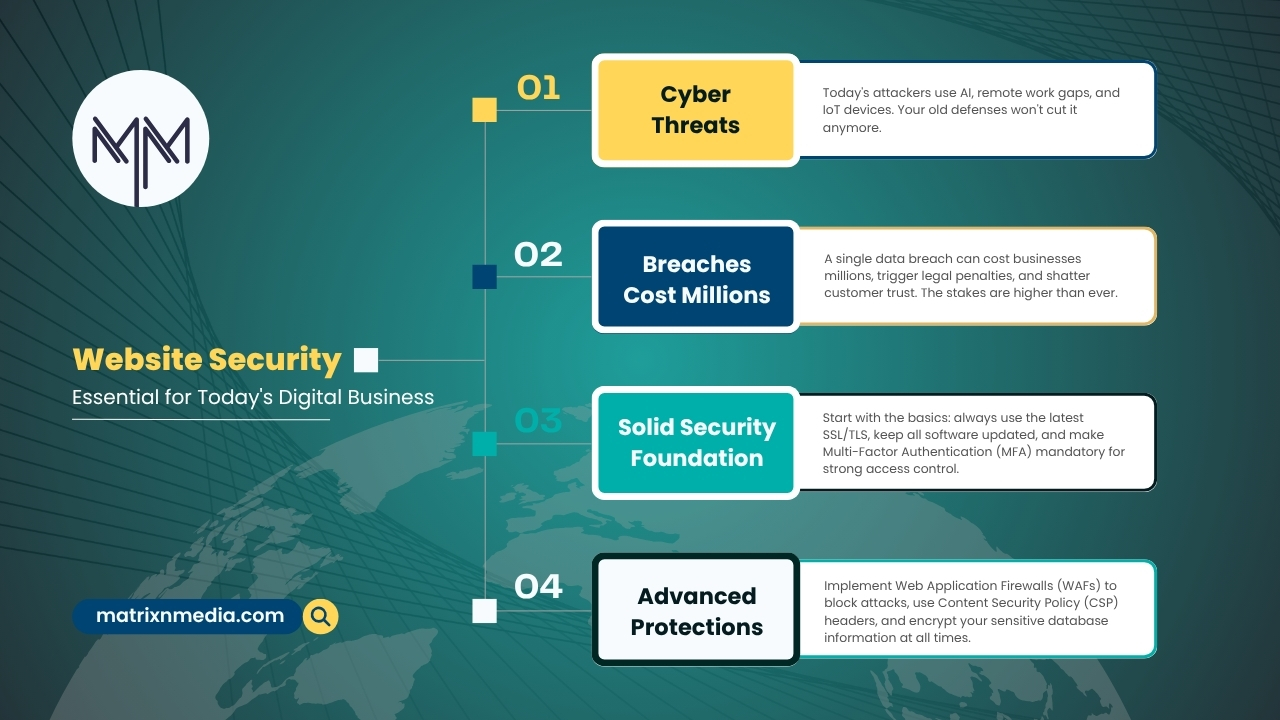
The digital threat environment in 2025 presents unique challenges. Cybercriminals are leveraging artificial intelligence to automate attacks, create more convincing phishing campaigns, and identify vulnerabilities faster than ever before. In the meantime, the attack surface has grown dramatically due to the widespread use of remote work and Internet of Things devices. Traditional security measures that worked just a few years ago are now insufficient against these modern threats.Data breaches cost businesses an average of $4.45 million globally, with small and medium enterprises often suffering disproportionately!
Beyond financial impact, companies face regulatory penalties, legal consequences, and long-term damage to customer trust. The stakes have never been higher, making proactive security measures essential rather than optional.
Essential Security Foundations
Building a secure website starts with fundamental practices that create multiple layers of protection. SSL/TLS certificates have become table stakes, but ensuring you’re using the latest protocols and cipher suites is crucial. Implement HTTP Strict Transport Security (HSTS) to prevent protocol downgrade attacks and ensure all communications remain encrypted.
Regular software updates represent one of the most effective yet often overlooked security measures. Outdated content management systems, plugins, and server software create entry points for attackers. Establish automated update procedures where possible, but always test updates in staging environments before deploying to production. This balance between security and stability requires careful planning but pays dividends in protection.
Strong authentication mechanisms protect both administrative access and user accounts. Multi-factor authentication should be mandatory for all privileged accounts, while encouraging or requiring it for regular users significantly reduces breach risk. Consider implementing adaptive authentication that adjusts requirements based on user behavior and risk factors.
Advanced Security Measures
Modern websites require sophisticated protection mechanisms beyond basic security hygiene. Web Application Firewalls (WAFs) provide crucial filtering against common attacks like SQL injection, cross-site scripting, and distributed denial-of-service attacks. Choose solutions that offer both signature-based and behavioral detection capabilities to catch both known and emerging threats.
Content Security Policy (CSP) headers offer powerful protection against injection attacks by controlling which resources browsers can load. Properly configured CSP can prevent malicious scripts from executing even if they somehow bypass other security measures. Similarly, implement other security headers like X-Frame-Options, X-Content-Type-Options, and Referrer-Policy to create comprehensive browser-level protection.
Database security demands particular attention since databases often contain your most sensitive information. Use parameterized queries to prevent SQL injection, implement proper access controls, and encrypt sensitive data both at rest and in transit. Regular database audits help identify unauthorized access attempts and potential vulnerabilities before they’re exploited.
The Human Factor
Technology alone cannot guarantee security success. Employee training and awareness programs address the human element that attackers frequently target. Phishing attacks have become increasingly sophisticated, with attackers using social engineering techniques that can fool even security-conscious individuals. Regular training sessions, simulated phishing exercises, and clear security policies help create a culture of security awareness.
Establish clear procedures for handling security incidents, including who to contact, what steps to take, and how to communicate with customers and stakeholders. Practice these procedures regularly through tabletop exercises to ensure everyone knows their role during an actual incident.
Common Security Pitfalls
Many organizations fall into predictable security traps that leave them vulnerable. Relying solely on perimeter security while neglecting internal threats creates a false sense of security. Implement zero-trust principles that verify every request regardless of its origin. This approach assumes that threats can come from anywhere, including inside your network.
Poor password policies remain surprisingly common. Default passwords, weak password requirements, and failure to rotate credentials create easily exploitable vulnerabilities. Implement comprehensive password policies that balance security with usability, and consider password managers to help users maintain strong, unique passwords across all systems.
Insufficient backup and disaster recovery planning can turn a security incident into a business-ending event. Regular, tested backups stored in secure, separate locations ensure you can recover quickly from ransomware attacks or other destructive incidents. Your backup strategy should include both data and system recovery procedures.

Monitoring and Incident Response
Continuous monitoring enables rapid detection and response to security threats. Implement logging across all systems and use security information and event management (SIEM) tools to analyze patterns and identify potential threats. Unusual activity can be identified by real-time monitoring before it develops into a major breach.
Develop detailed incident response plans that outline specific steps for different types of security events. These plans should include technical response procedures, communication protocols, and legal requirements. Regular testing and updates ensure these plans remain effective as your systems and threat landscape evolve.
Compliance and Best Practices
Regulatory compliance requirements like GDPR, CCPA, and industry-specific standards create both obligations and opportunities. While compliance can seem burdensome, these frameworks often provide excellent security guidance. Use compliance requirements as a foundation for your security program, then build additional protections based on your specific risk profile.
Regular security assessments, including penetration testing and vulnerability scanning, help identify weaknesses before attackers do. These assessments should be performed by qualified professionals and repeated regularly as your systems change and new threats emerge.
Looking Forward
Website security in 2025 requires a comprehensive, multi-layered approach that combines technical controls, human awareness, and continuous improvement. The threats will continue evolving, but organizations that implement strong security foundations, maintain vigilance, and adapt to new challenges will be best positioned to protect their digital assets.
At Matrix Media Solutions, we help businesses overcome the complexities of the security landscape with tailored solutions that balance protection with performance. Contact us to discuss how we can strengthen your website security and protect your digital future. Remember, in cybersecurity, the best defense is a proactive offense built on solid fundamentals and continuous adaptation!