

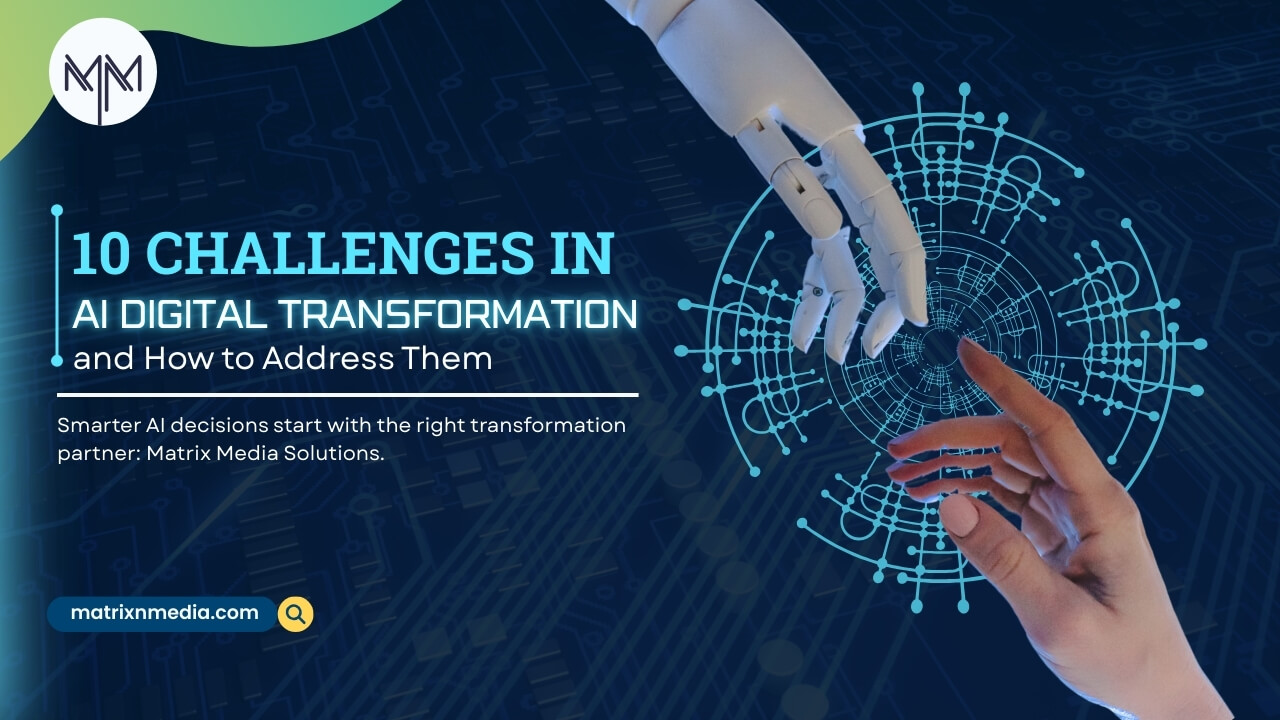
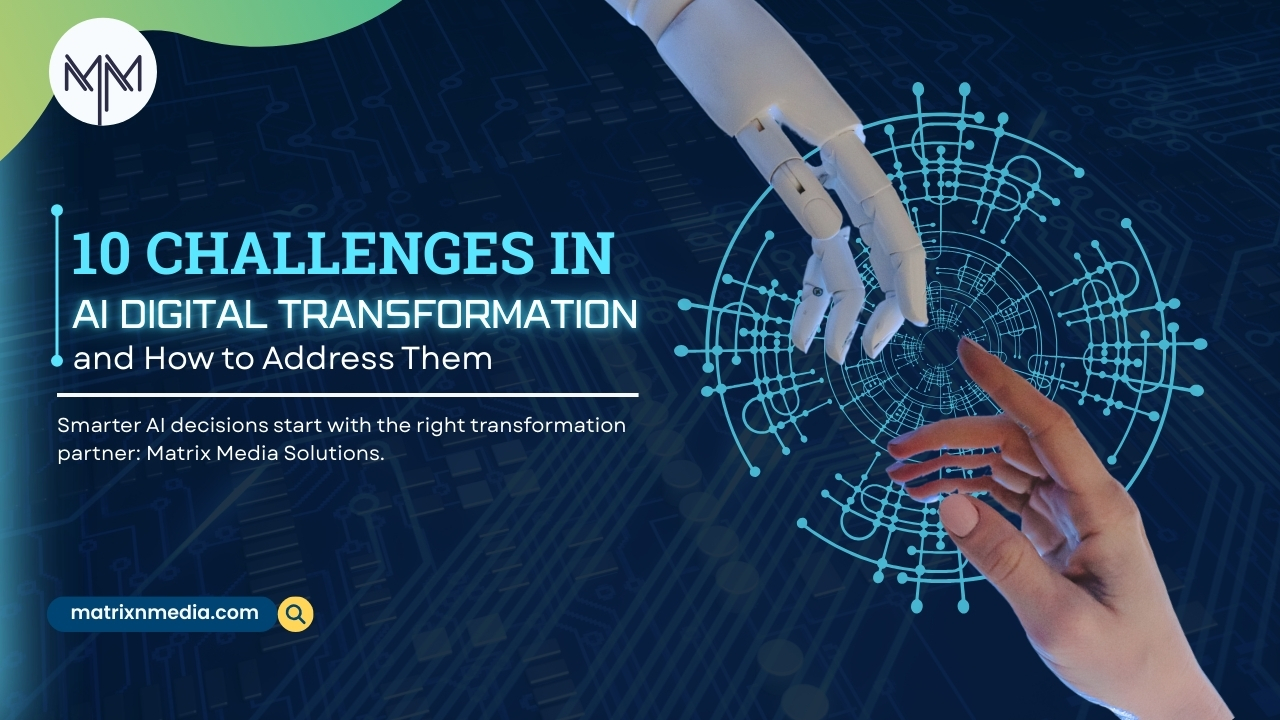
Digital transformation powered by artificial intelligence has become the most essential part for businesses aiming to stay competitive in today’s rapidly evolving marketplace. According to the latest reports, 85% of enterprises will use AI to automate core business functions, transforming decision-making and driving efficiency.
However, the journey toward AI integration is fraught with challenges that can derail even the most well-intentioned initiatives. Understanding these obstacles and knowing how to address them is crucial for successful implementation.
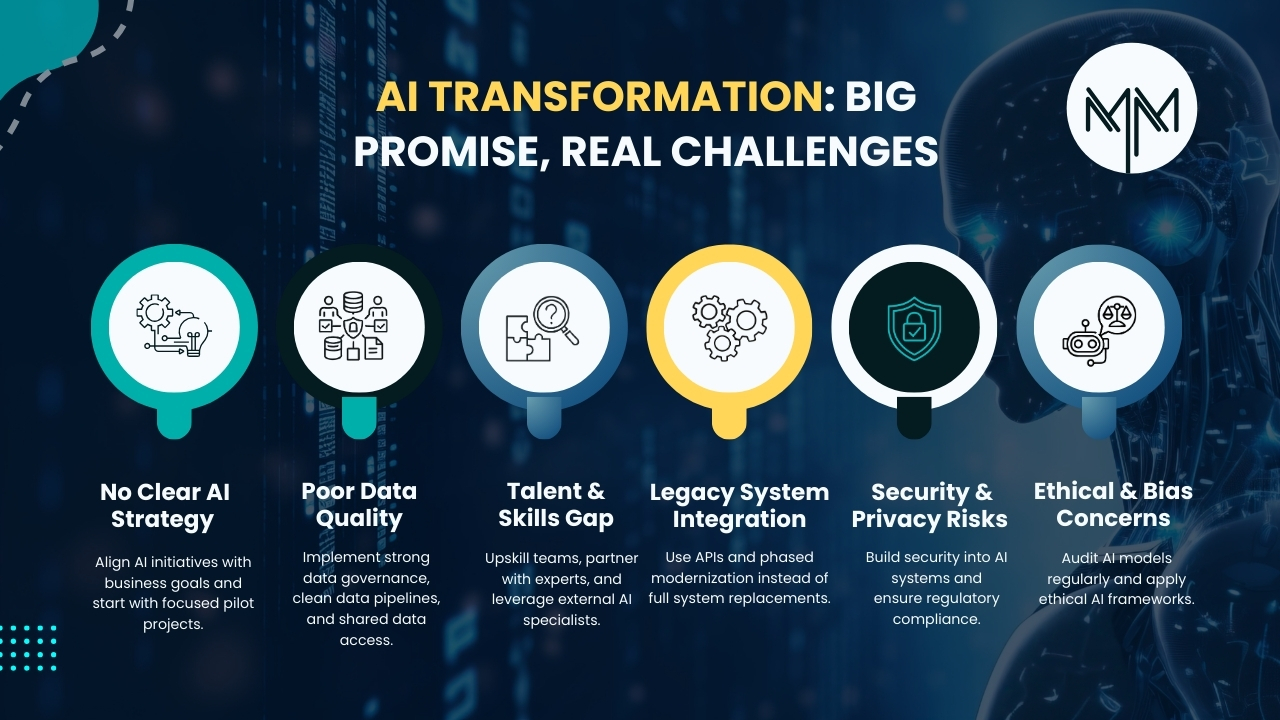
1. Lack of Clear Strategy and Vision
Many organisations jump into AI adoption without a coherent roadmap. They invest in technology without understanding how it aligns with their business objectives, leading to wasted resources and disappointing results.
Solution: Develop a comprehensive AI strategy that aligns with your overall business goals. Start with pilot projects that address specific pain points, measure outcomes, and scale gradually based on proven success.
2. Data Quality and Accessibility Issues
AI systems are only as good as the data they’re trained on. Organisations often struggle with siloed, incomplete, or poor-quality data that undermines AI effectiveness.
Solution: Invest in secure data governance frameworks. Implement data cleaning processes, establish unified data repositories, and create protocols for continuous data quality monitoring. Ensure data is accessible across departments while maintaining security and compliance.
3. Talent Shortage and Skills Gap
Finding professionals who understand both AI technology and business applications remains a significant challenge. The demand for AI specialists far exceeds supply, making recruitment and retention difficult.
Solution: Adopt a multi-pronged approach, including upskilling existing employees, partnering with educational institutions, and collaborating with specialised agencies that can provide expertise and guidance throughout your transformation journey.
4. Integration with Legacy Systems
Existing infrastructure often wasn’t designed with AI in mind. Integrating modern AI solutions with legacy systems can be technically complex and expensive.
Solution: Conduct thorough system audits to identify integration points. Consider API-based approaches that allow gradual modernisation without complete system overhauls. Work with partners who have experience bridging legacy and modern technologies.
5. Resistance to Change
Employees may fear that AI will replace their jobs, leading to resistance that hampers adoption. This cultural barrier can be more significant than technical challenges.
Solution: Focus on change management from day one. Communicate clearly about how AI will augment rather than replace human capabilities. Involve employees in the transformation process, provide training, and celebrate early wins to build momentum.
6. Budget Constraints and ROI Uncertainty
AI transformation requires significant investment, and executives often struggle to justify costs when returns aren’t immediately apparent.
Solution: Start with high-impact, lower-cost projects that can demonstrate quick wins. Document and communicate successes to build confidence. Develop clear metrics for measuring ROI beyond just cost savings, including improvements in customer satisfaction, operational efficiency, and innovation capacity.
7. Security and Privacy Concerns
AI systems handle vast amounts of data, raising concerns about breaches, privacy violations, and regulatory compliance.
Solution: Implement security by design principles. Ensure compliance with regulations like GDPR and industry-specific standards. Conduct regular security audits and maintain transparent data practices that build trust with customers and stakeholders.
8. Scalability Challenges
What works in a pilot project may not scale across the organisation. Infrastructure, processes, and governance structures need to support growth.
Solution: Design with scalability in mind from the beginning. Use cloud-based solutions that can grow with demand. Establish governance frameworks that can adapt as AI usage expands across different departments and use cases.
9. Ethical and Bias Considerations
AI systems can inadvertently perpetuate biases present in training data, leading to unfair outcomes and reputational damage.
Solution: Implement ethical AI frameworks that include diverse perspectives in development. Regularly audit AI systems for bias, maintain transparency in how decisions are made, and establish accountability mechanisms for AI-driven outcomes.
10. Keeping Pace with Rapid Technological Change
The AI landscape evolves constantly, making it difficult to choose the right technologies and avoid obsolescence.
Solution: Build flexibility into your AI architecture. Focus on solving business problems rather than chasing the latest technology trends. Maintain relationships with technology partners who can provide ongoing guidance and updates.
Moving Forward with Confidence
Successfully navigating AI digital transformation demands strategic thinking, cultural adaptation, and the right partnerships. Organisations that acknowledge these challenges head-on and address them systematically are far more likely to realise the full potential of AI.
The key is not to tackle everything at once. Prioritise challenges based on their impact on your specific business context, celebrate incremental progress, and remain committed to continuous learning and adaptation.

Partner with Matrix Media Solutions for Your AI Transformation Journey
At Matrix Media Solutions, we understand that AI digital transformation is both an opportunity and a challenge. Our team of experts specialises in helping businesses navigate the complex landscape of AI adoption, from strategy development to implementation and beyond.
We deliver comprehensive solutions that address the real challenges organisations face. Whether you’re struggling with data quality, talent gaps, integration complexities, or change management, our proven methodologies and hands-on approach ensure your transformation initiative succeeds.
With Matrix Media Solutions as your partner, you gain access to cutting-edge AI expertise, industry best practices, and a collaborative approach that aligns technology with your business objectives. We’ve helped numerous organisations overcome these exact challenges, turning AI from a buzzword into a competitive advantage.
Ready to transform your business with confidence? Contact Matrix Media Solutions today, and let’s build your AI-powered future together.